You can find qualified EV charger installers near you by checking local certified electricians, installer marketplaces, and customer reviews to compare services, pricing, and certifications. Choosing a certified installer who understands your home’s electrical capacity and local permitting rules ensures a safe, code-compliant installation and avoids costly upgrades later.
This article EV Charger Installers Near Me guides you through how to evaluate installers, what questions to ask, and what to expect during installation and safety checks so you can hire with confidence. Follow the practical steps here to save time, reduce surprises, and get your charger working reliably.
How to Choose the Best EV Charger Installers Near Me
You want a safe, code-compliant installation that fits your vehicle, electrical panel, driveway layout, and budget. Prioritize installers who document site assessments, provide clear pricing, and show relevant credentials.
Key Qualities to Look for in Local Installers
Look for installers with hands-on EV charger experience, not just general electrical work. Ask how many home EV chargers they’ve installed in the past year and whether they’ve handled jobs similar to yours (garage, detached garage, outdoor pedestal, shared parking).
Check responsiveness and communication. A reliable installer will offer a site visit, explain conduit and panel upgrade needs, and provide a written timeline. Read recent customer reviews for punctuality, cleanup, and whether they resolved permit or utility interconnection issues.
Confirm they carry liability and worker’s compensation insurance. Request warranty details for labor and ask which charger’s manufacturer warranty they support. Prefer installers who use local permits and can coordinate with your utility for incentives or demand-response program enrollment.
Certifications and Credentials That Matter
Verify a valid electrical contractor’s license for your state or municipality. Licensing ensures the installer meets local code knowledge and inspection requirements. Note the license number and confirm it on your state licensing board’s website.
Look for manufacturer certifications (Tesla, ChargePoint, Enel X, JuiceBox) if you already picked a charger brand. These certifications indicate familiarity with specific hardware and firmware updates. Also consider certifications in EV-specific training programs or trade associations; they signal ongoing education.
Ask for proof of insurance and bonding in writing. Request references for similar installations and copies of past permit approvals or inspection sign-offs. Keep records of all credentials and attachments with your contract.
Comparing Quotes and Service Packages
Request at least three written quotes that break out labor, materials, permits, panel upgrades, and additional conduit or trenching. Compare the same scope across bids; avoid apples-to-oranges comparisons. Use a simple table to compare line items, lead time, warranty, and included permit fees.
Watch for low bids that omit permit pulls or portable load management. Clarify whether they’ll handle utility interconnection and available rebates; some installers include paperwork assistance while others charge extra. Verify payment terms, cancellation policy, and whether the installer will leave the worksite tested and registered with the charger manufacturer for warranty activation.
Installation Process and Safety Considerations
Expect a professional installer to evaluate your electrical capacity, recommend the right charger level, handle permits, and provide post-installation testing and maintenance options.
Site Assessment and Preparation
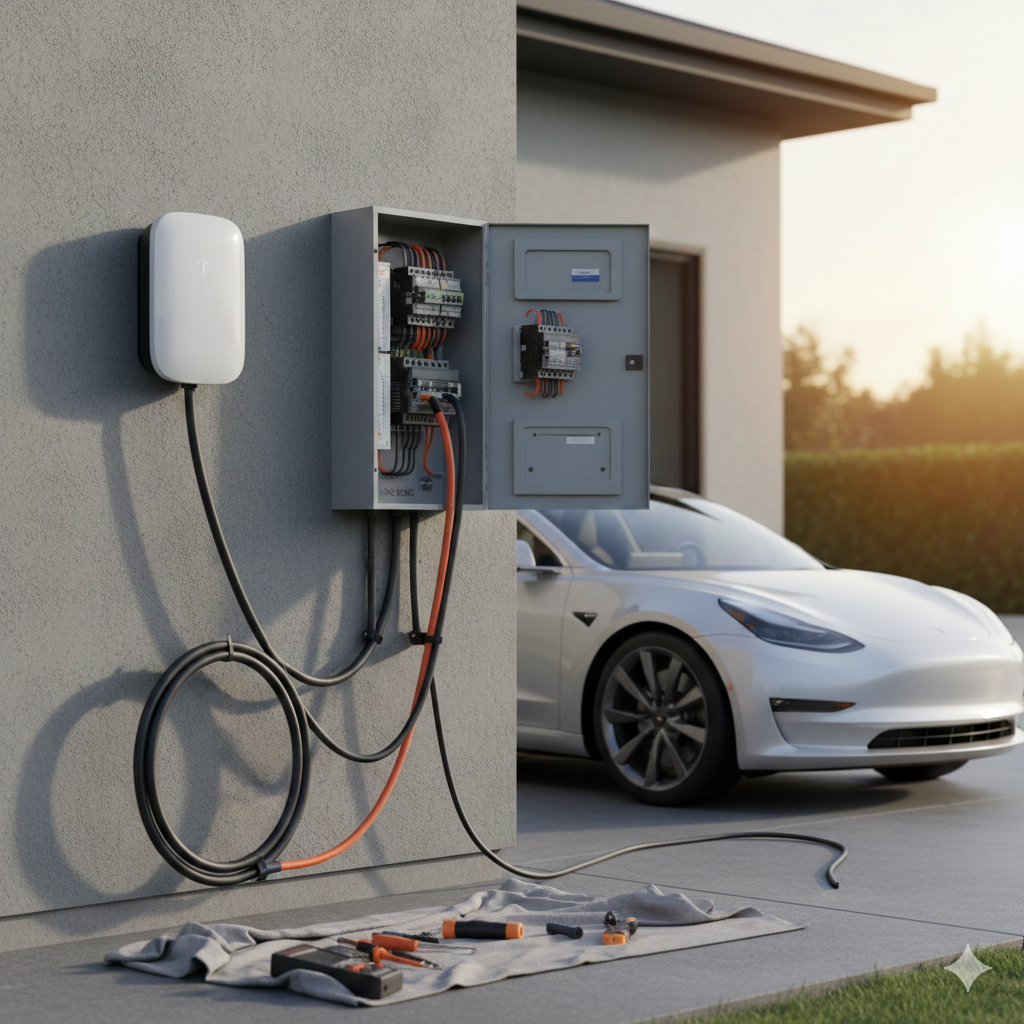
A certified electrician will inspect your main service panel, meter, and the route from the panel to the proposed charger location. They measure available amperage, determine whether a panel upgrade or subpanel is needed, and note obstructions or trenching requirements.
You should provide vehicle make/model and typical charging needs so the installer can size the circuit and recommend Level 2 (240V) versus Level 1 (120V). Confirm driveway layout, distance to the garage, and where you want the cord to reach; longer runs add labor and conduit costs.
Expect surface prep such as concrete drilling, conduit installation, and surface-mounted or recessed mounting. The installer will verify grounding, GFCI/earth-fault protection, and clearances from combustibles to meet code and minimize fire risk.
Permits and Local Regulations
Your installer should pull required electrical permits and submit plans to the local authority having jurisdiction (AHJ). Permit processes vary: some municipalities accept online submittals, others require paper plans and inspections.
Ask the installer which local codes apply (National Electrical Code updates, utility connection rules, and any municipality-specific EV ordinances). Confirm whether a demand charge study, utility notification, or interconnection application is needed for higher-capacity installations.
Keep copies of permits, inspection reports, and equipment spec sheets. These documents help with future resale, warranty claims, and eligibility for local rebates or tax incentives.
Post-Installation Support and Maintenance
After installation, the technician should perform a commissioning checklist: voltage and amperage tests, ground-fault trip tests, load balancing verification, and Wi‑Fi/network setup if the unit is smart. You should get a demonstration of basic operations, fault indicators, and how to reset or isolate the unit safely.
Arrange a written service agreement or warranty coverage that lists response times, labor rates, and scheduled maintenance tasks like torque checks and software updates. Keep a log of service visits and any firmware upgrades; proactive maintenance reduces downtime and preserves charger lifespan.