Copper plays a central role in electrification, construction, and manufacturing, so your exposure to it can move with global demand and technological shifts. If you want a practical way to hedge inflation, participate in the energy transition, or target industrial growth, copper offers accessible investment paths from ETFs and mining stocks to futures and physical holdings.
This post Copper Investing will walk you through the core drivers that set copper prices and the realistic ways you can gain exposure, so you can choose the method that fits your goals and risk tolerance. Expect clear comparisons of fundamentals, strategies, and trade-offs to help you act with confidence.
Fundamentals of Copper Investing
Copper’s price reacts to a few concrete forces: industrial demand from power, construction and EVs; mine output and concentrate availability; and macro factors like inventories, currency moves, and interest rates. You should watch specific metrics—China’s refined copper imports, LME stocks, and mine project timelines—to gauge near-term risk and opportunity.
Market Drivers and Demand
Demand centers on electricity transmission, construction wiring, and electric vehicles (EVs). EVs and renewable energy systems require roughly 3–4x more copper per unit than conventional vehicles, so vehicle electrification and grid expansion directly raise long-term demand.
Monitor consumption by region. China accounts for a large share of refined-copper demand; changes in its property and manufacturing sectors move prices. Also watch sectoral shifts: appliance and industrial equipment production cycles drive cyclical demand, while government infrastructure stimulus creates step changes.
Key indicators to track: refined production vs. apparent consumption, end-use demand by sector, EV adoption rates, and global copper intensity per unit of GDP. These give you concrete signals rather than vague trends.
Supply Dynamics and Production
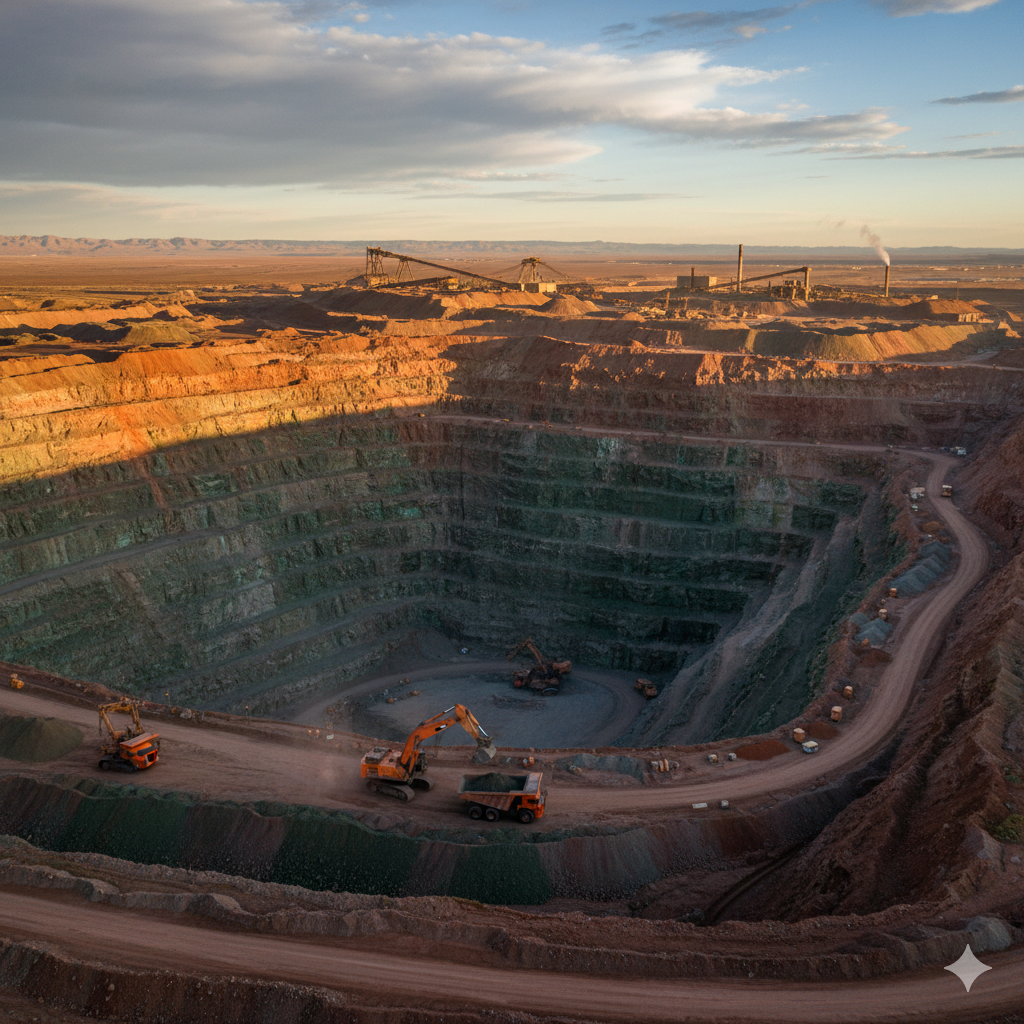
Primary supply comes from large open-pit and underground mines in Chile, Peru, and Congo, plus secondary supply from recycling. New large-scale projects take 5–10 years to develop, so supply responds slowly to price signals.
Geopolitical risk and ore grade decline matter. Chilean labor disputes, Peruvian permitting delays, or lower average ore grades reduce output and increase marginal production costs. Processing bottlenecks—concentrator capacity, smelter outages, and logistics—can tighten availability even when mine output looks sufficient.
Watch project pipelines (expected start dates and capacities), scrap/recycling rates, and concentrate treatment charges. These factors determine whether higher prices translate into increased physical supply or merely squeeze consumers.
Historical Price Trends
Copper has long exhibited both cyclical swings and secular appreciation tied to industrialization. Prices rise sharply during global expansion phases and correct during recessions or demand slowdowns. Notable drivers of past rallies include Chinese stimulus and infrastructure booms.
Real prices have trended upward over decades, reflecting rising extraction costs and growing electrical demand, but volatility remains high. Short-term moves often reflect inventory shifts on exchanges (LME, SHFE), macro data releases, or currency-strength changes—especially the U.S. dollar.
Use a mix of timeframes: 3–12 month charts for trading signals, 3–10 year views for project and structural analysis, and longer-term real-price series to assess inflation-adjusted trends.
Methods and Strategies for Copper Investors
You can get exposure to copper through physical metal, equity ownership in miners, or pooled funds. Each route differs in liquidity, cost, tax treatment, and how closely it tracks copper’s price.
Physical Copper Investments
Buying physical copper gives you direct ownership of the metal. Options include copper rounds, bars, and large copper cathodes; cathodes are used by industrial buyers and often trade at lower premiums than retail rounds. Storage and security matter: you must decide between home storage, third‑party vaults, or allocated storage with an insurer; allocated storage preserves your specific bars, while unallocated accounts expose you to counterparty risk.
Consider transaction costs: dealer premiums, shipping, assay fees, and sales spreads can erode returns, especially on small purchases. Physical copper does not pay dividends or yield, and resale requires finding buyers or dealers willing to pay market price minus fees. Tax treatment varies by jurisdiction; check capital gains rules and VAT or sales tax on metals.
Copper Mining Stocks
Owning copper mining stocks gives you leverage to copper prices plus company‑specific risks. Choose between large diversified miners, mid‑tier pure‑play copper companies, and junior exploration names. Large miners offer more balance-sheet strength and dividends, while juniors can deliver higher upside and higher failure risk.
Evaluate fundamentals: reserves and resources, production costs (cash cost per pound), mine life, political risk where assets sit, and management track record. Use valuation metrics like EV/EBITDA and production growth forecasts. Expect operational risks (geology, cost inflation), permitting delays, and cyclical revenue; diversify across companies and consider position sizing to limit single‑company exposure.
Copper ETFs and Mutual Funds
ETFs and mutual funds provide pooled exposure with easier trading and lower storage headaches. You can choose funds that track copper futures, hold shares of mining companies, or use a blend. Futures‑based ETFs can suffer from roll yield in contango; check the fund’s methodology and historical roll performance.
Mining equity ETFs reduce single‑stock risk but add company and equity‑market correlation. Look at expense ratios, tracking error, liquidity (average daily volume), and underlying holdings. For tax efficiency, review how gains are treated: commodity funds tied to futures may generate different tax forms than stock‑based funds. Use ETFs for core allocation and stocks or physical metal for tactical tilts.