You’ll find Michigan’s mining story is both historical powerhouse and present-day opportunity, stretching from the Keweenaw’s copper booms to a handful of modern operations producing nickel, copper, and industrial minerals. Michigan still matters to U.S. supply chains: it produced critical metals historically and today offers resources and potential for rare-earth and industrial mineral extraction.
This article Mining in Michigan will take you through how mining shaped communities and economies, what remains active now, and the trade-offs between jobs and environmental stewardship. Expect clear facts on past production, current operations, and the economic and environmental impacts that affect local lives and national needs.
History and Present of Mining in Michigan
You will find a long history of copper and iron extraction that shaped Michigan’s Upper Peninsula economy, communities, and landscape. Today mining continues at a smaller scale, focused on iron, aggregate, and emerging battery-related minerals under stricter environmental controls.
Early Mining Operations
Native people began collecting and cold-working native copper around 3000 BCE on the Keweenaw Peninsula; that pre-contact copper use created tool and trade networks you can still trace archaeologically. Commercial mining started in the 1840s when prospectors exploited surface and fissure deposits, then shifted to amygdaloidal lodes that allowed deeper shaft and drift mining.
By mid-19th century you could see rapid industrial development: shaft houses, smelters, and transport links to Great Lakes ports. Labor forces included local settlers and waves of immigrants, and by the 1850s–1880s Michigan often led the U.S. in copper output and, later, iron ore production from the Marquette and Menominee ranges.
Major Minerals and Resources
Copper and iron dominate Michigan’s historic production record. Copper from the Keweenaw came as native copper, chalcocite, and copper-arsenide minerals; iron ore came from the Marquette, Menominee, and Gogebic ranges and supplied blast furnaces across the Midwest.
Other resources include silver associated with copper deposits, nickel occurrences, and industrial aggregates used locally. Presently, identified mines in state databases list iron, copper, and silver most often, while exploration targets now emphasize lithium and other battery-related minerals that could link Michigan’s mining sector to the state’s automotive and clean-energy supply chains.
Modern Mining Practices
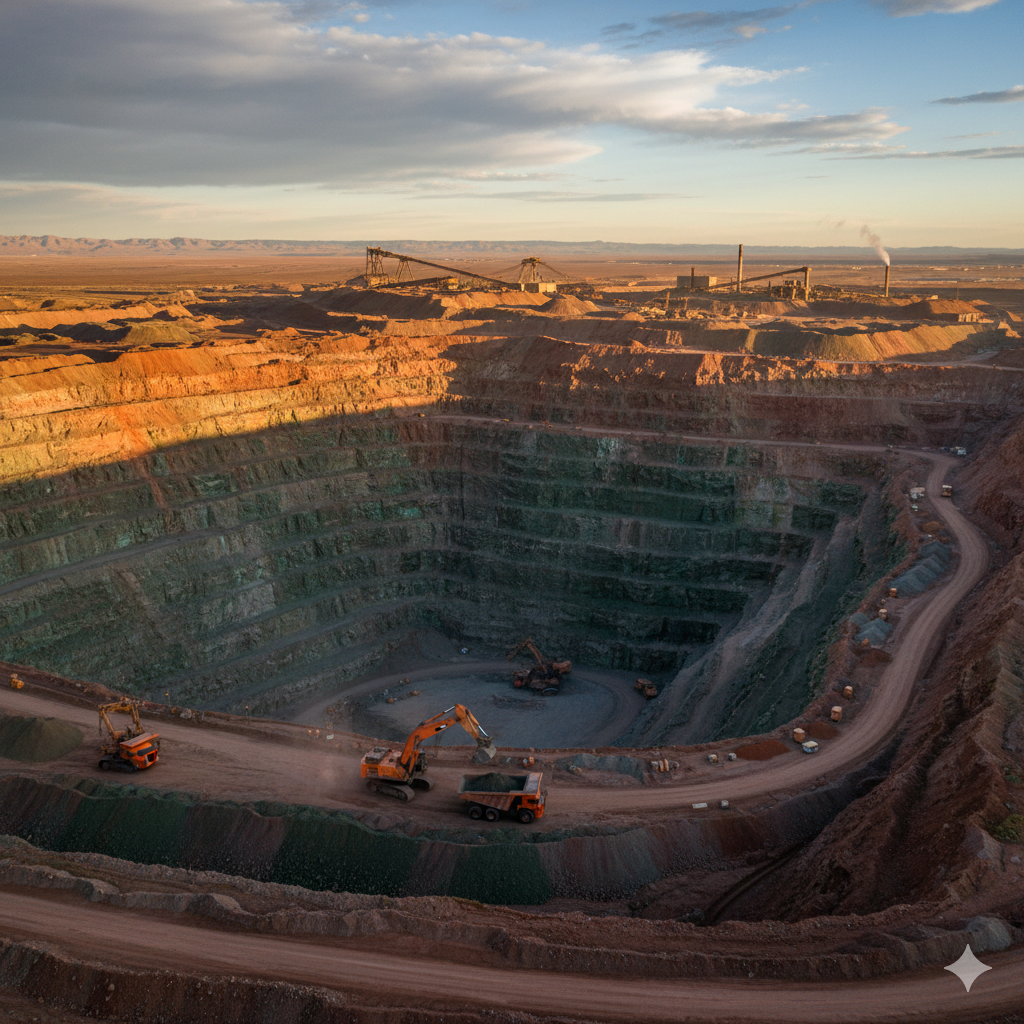
You will notice modern operations are smaller and more regulated than 19th-century boom mines. Contemporary mines follow state and federal permitting, implement environmental monitoring, and use mechanized open-pit and underground methods to reduce surface disturbance and improve worker safety.
Reclamation and water-quality controls are standard permit conditions, and companies commonly post bonds or financial assurances for site closure. Mining now often integrates exploration for critical minerals (like lithium) with community consultation and technical studies to address legacy issues—tailings stability, acid rock drainage, and historic site contamination—before operations begin.
Economic and Environmental Impact
Mining in Michigan generates direct revenue, supports thousands of jobs, and affects water, land, and community health through legacy sites and current operations. You will find trade-offs between economic benefits from nickel, copper, iron, and aggregate production and the environmental costs that drive regulation, reclamation, and community responses.
Contribution to Michigan’s Economy
You rely on Michigan mining for materials used in batteries, construction, and manufacturing. Metallic mines in the Upper Peninsula supply nickel and copper for battery and industrial markets, while statewide aggregate and industrial minerals feed roadbuilding and concrete production.
Recent values show mineral production worth about $2.5 billion annually and roughly 9,100 direct mining jobs, with additional indirect employment in transport, equipment, and processing.
Key economic features:
- Primary metals: nickel and copper from active UP mines (Eagle Mine cited as a major nickel producer).
- Construction materials: sand, gravel, and cement used statewide.
- Local tax and royalty revenue: supports county services and infrastructure. You should note that exploration for “battery metals” has increased, attracting investment but also raising questions about long-term local economic stability and commodity-price risk.
Environmental Regulations and Sustainability
You must navigate federal and state permitting that governs water discharge, air emissions, and reclamation plans. Michigan enforces Clean Water Act provisions, state-level permits, and reclamation requirements for mines and aggregates; projects often require environmental impact statements and monitoring.
Operators implement measures like groundwater monitoring, progressive reclamation, and engineered tailings systems to reduce risk.
Practical regulatory points:
- Permits: NPDES and state water quality permits for effluent.
- Reclamation bonds: financial assurances ensure site cleanup.
- Monitoring: ongoing groundwater and surface-water sampling. You should expect stricter scrutiny for projects near sensitive watersheds and community drinking sources, and growing emphasis on minimizing legacy contamination while enabling supply of critical minerals.
Community and Workforce Development
You will see both opportunity and tension in mining-impacted communities. Mining provides skilled jobs, apprenticeships, and supplier contracts in rural Upper Peninsula counties, often improving local incomes and sustaining small businesses. Workforce programs partner with community colleges and trade schools to train drillers, mill operators, and environmental technicians.
Community considerations:
- Job creation: direct mining employment and local service jobs.
- Training: workforce pipelines from technical schools for mining trades.
- Social license: public meetings, mitigation commitments, and benefit-sharing affect local acceptance. You should recognize that community support often hinges on transparent monitoring, tangible economic benefits, and effective mitigation of noise, traffic, and environmental impacts.